Non-verbal graphical user interfaces
- Duration
- Apr 1, 2019-Jun 1, 2019
- Type of project
- University work
- Tags
- Learnt skills
- Concepting
Key work
Non-verbal behaviour is the most crucial aspect of communication. This fact is mostly ignored by modern day social messaging applications. I designed several solutions that might bridge this gap between real life- and social media interactions, while staying close to the current design of the mobile phone.
Method
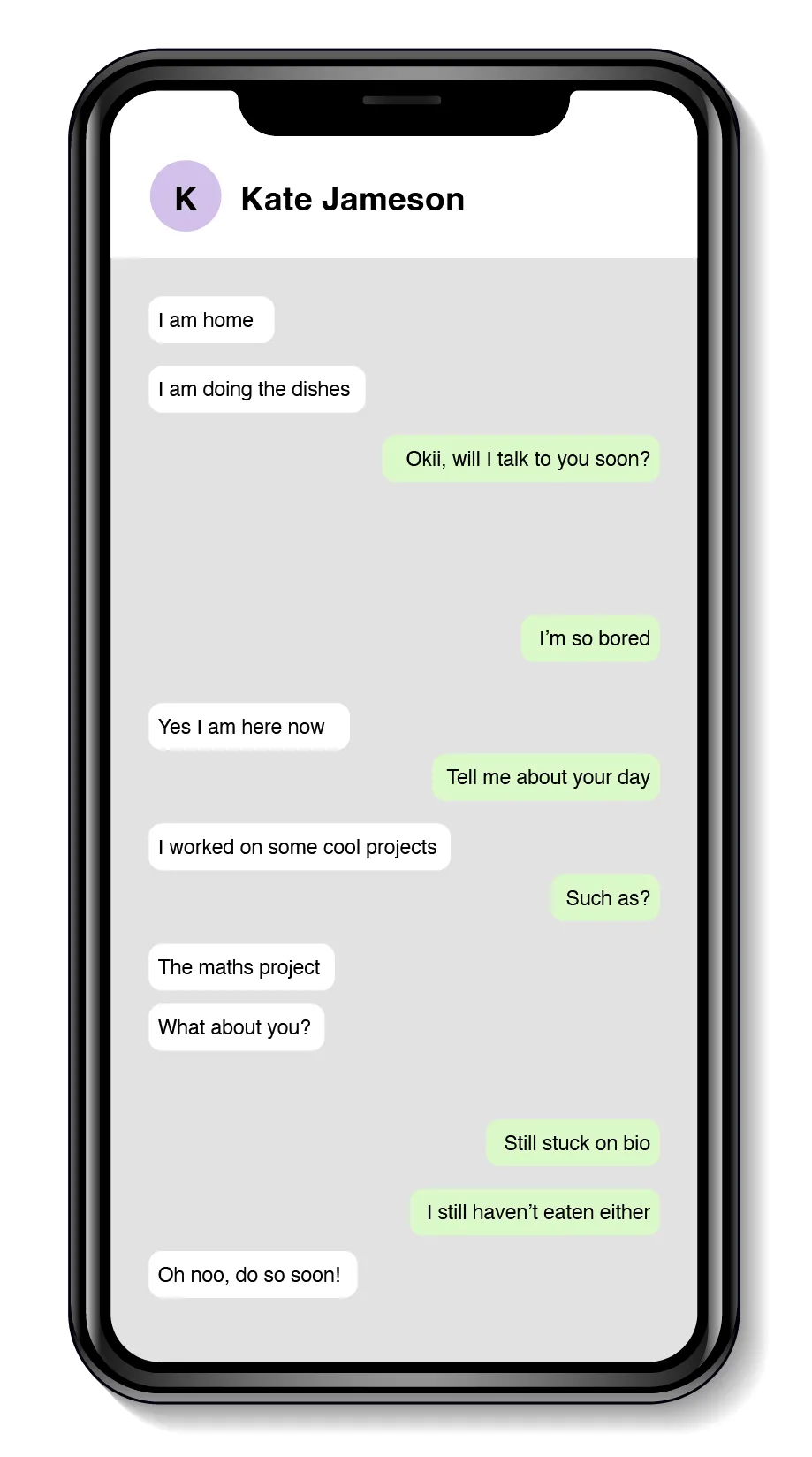
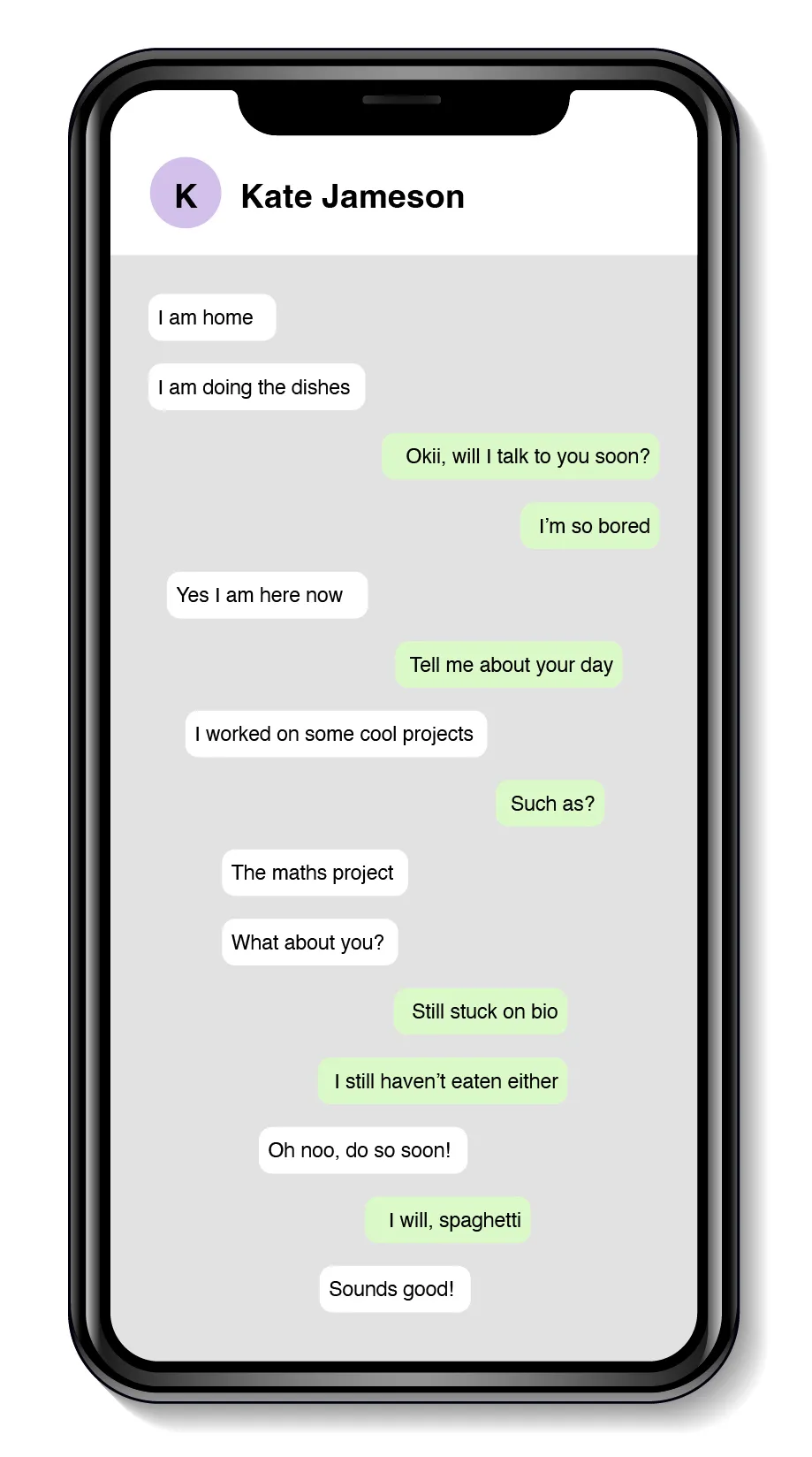
With social media ever present, many of our daily conversations are held via text messaging services. However, the interactions are said to be lacking in ''richness''. Through ethnographic research on social and mobile interactions (both interviews and videos), I identified attentiveness, timing and expressiveness as important non-verbal behaviour sets.
I used components from these sets - such as forward leaning and facial animation - to create new concepts for text messaging GUI's, that leverage our body knowledge. Text boxes take on new meanings by posing as users' own bodies.
The proposed design ideas support participatory sensemaking by making control and coordination of movements of the text boxes possible.
My ideas propose a new perspective on the use of embodiment by keeping representations compact and avoiding the addition of extra physical components, which often happens in the field of Embodied Interaction. There was insufficient time during the course project to fully test users' understanding of all the different concepts.
Video
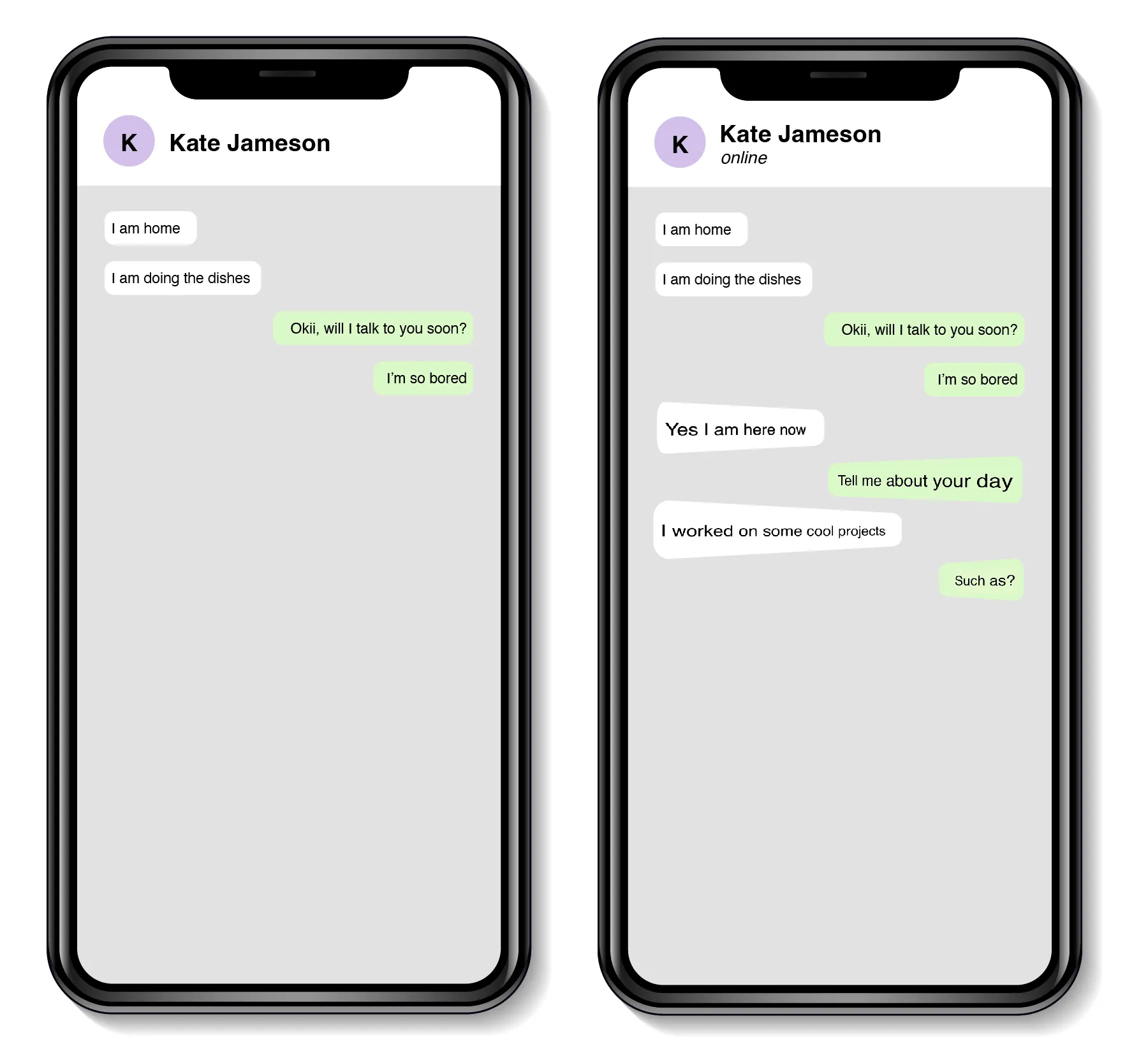
On text messaging services, it can happen that you see your conversational partner as online and are waiting patiently for an answer, while they are actually answering different people. In this concept, the text boxes will turn towards each other as soon as both people are online and present in the same chat. This skewness can be manually changed to reflect the level of attention that you have at this moment.